
Language is far more than a means of communication. It is an invaluable cultural asset that carries a community's history, traditions, civilization, indigenous knowledge, and identity.
Nepal is a multilingual, multicultural, and multireligious nation, home to diverse ethnic communities with distinct identities. Every language spoken across the country represents a living expression of a community’s history, way of life, traditions, indigenous knowledge, and civilization. This linguistic diversity is also an important part of Nepal’s national heritage.
Yet, paradoxically, several mother tongues spoken by Indigenous Nationalities and marginalized communities are gradually weakening, with some facing the threat of extinction. Among the languages confronting this challenge is Chepang, also known as Chyobang or Praja.
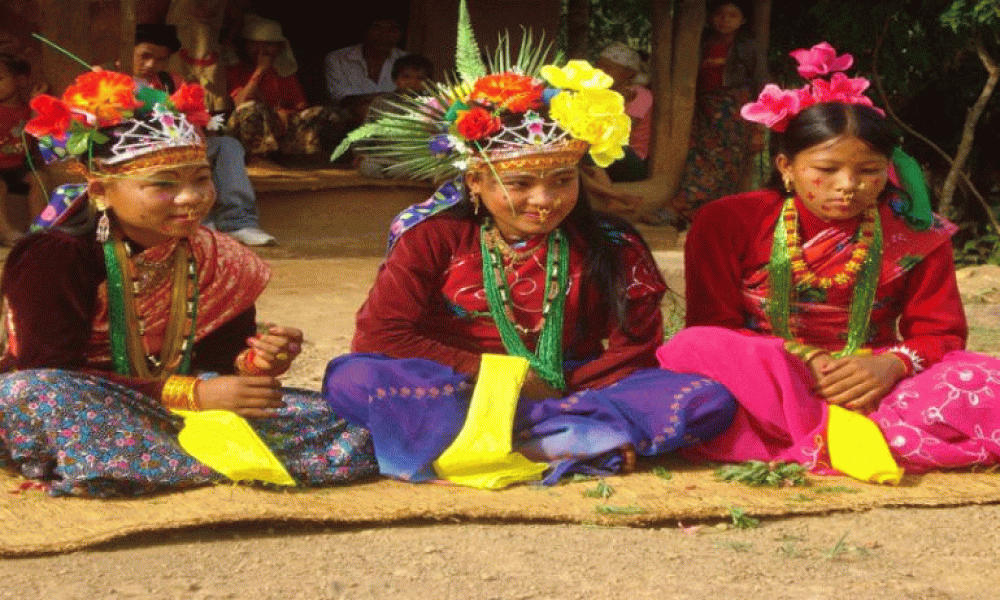
The Chepang are among Nepal’s highly marginalized Indigenous Peoples. According to national census figures, the Chepang population stood at 52,237 in 2001 (2058 B.S.), increased to 68,399 in 2011 (2068 B.S.) and reached 84,364 in 2021 (2078 B.S.).
Although the community's population has grown significantly, the proportion of people who actively speak their mother tongue has become a concern. Not all community members use Chepang in everyday communication, and the transmission of the language to younger generations is becoming increasingly fragile.
A growing population does not guarantee a language's survival. For a language to remain alive, it must be spoken, taught, learned, written, and used regularly in everyday life.
Current State of the Chepang Language and Its Challenges
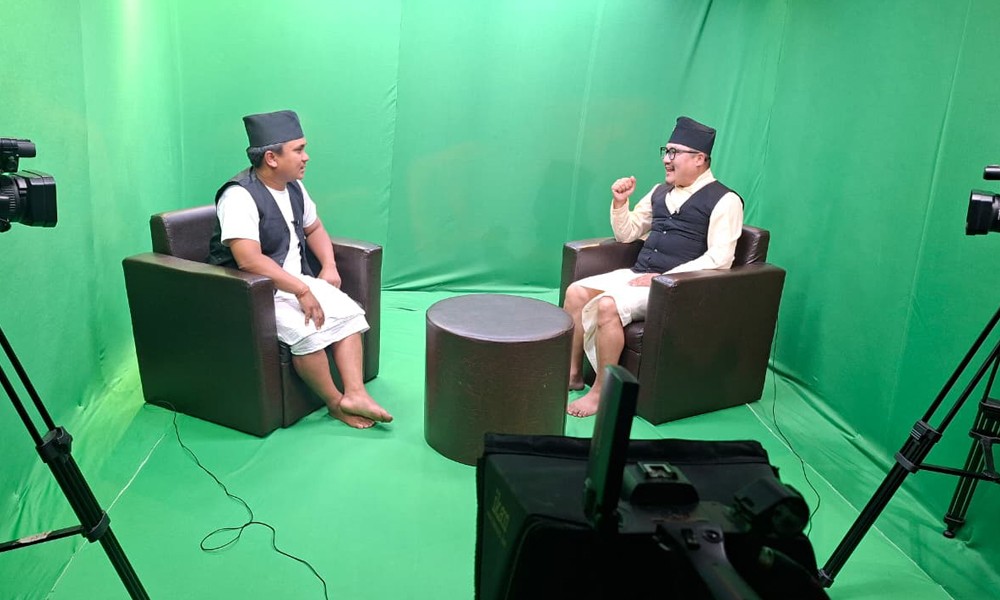
Recently, I had the opportunity to participate in Krusakaisa–Paikkaisa, a historic Chepang-language television program hosted by my dear friend Bishwas Chepang through Indigenous Television in collaboration with the Nepal Chepang Association.
During the program, I shared my perspective on the importance of the Chepang language, its current condition, and the urgent need to preserve it.
One particularly serious concern I raised was the gap between the Chepang community's growing population and the comparatively unsatisfactory number of people who actively speak the language.
Today, more and more Chepang families communicate with their children in Nepali rather than in their mother tongue. Some community members understand Chepang but hesitate to speak it, while many children of the younger generation have not even had the opportunity to learn it.
Today, more and more Chepang families communicate with their children in Nepali rather than in their mother tongue. Some community members understand Chepang but hesitate to speak it, while many children of the younger generation have not even had the opportunity to learn it.
If this trend continues, the natural process through which a language passes from one generation to the next will gradually deteriorate.
The disappearance of a language is not merely the loss of words. It also means the gradual disappearance of indigenous knowledge, proverbs, folklore, traditional songs, cultural practices, ancestral skills, environmental wisdom, and experiences accumulated over generations.
For this reason, preserving the Chepang language must not be viewed solely as a linguistic concern. It must be understood as essential to safeguarding the community's collective identity, cultural heritage, and continued existence.
Relationship Between Mother Tongue and Identity
An Indigenous community's identity cannot be defined by its name or surname alone. Language, culture, history, traditions, indigenous ways of life, and collective consciousness give that identity meaning and continuity.
The Chepang community possesses its own distinctive language and cultural heritage. Being Chepang, therefore, also means recognizing, respecting, and preserving this linguistic and cultural uniqueness.
An important principle every mother-tongue speaker should understand is that speaking one's native language does not mean rejecting other languages or showing intolerance toward them.
Learning and using Nepali, English, Hindi, or any other language can be essential for expanding knowledge, accessing opportunities, and strengthening relationships with the wider world. However, learning additional languages should never come at the expense of forgetting one's mother tongue.
In today's world, acquiring other languages for education, employment, and livelihood opportunities is increasingly necessary. Yet speaking and writing in one's mother tongue is equally important for keeping the language of one's heart alive.
English has become a major language of international communication, education, technology, and employment. Hindi also exercises considerable influence, while Nepali serves as a common language of communication throughout Nepal.
Each of these languages has its own significance and practical value. Nevertheless, the Chepang community must not neglect its ancestral language.
Learning other languages can make us more capable and connected to the world, but preserving our own language lets us carry our unique linguistic identity forward through generations.
Language Preservation Begins with Me, You, and the Community
The primary responsibility for preserving any language rests with the community that speaks it. More importantly, it rests with every individual within that community.
That individual is me. That individual is you.
Therefore, language preservation must begin with our own commitment and everyday practices.
Governments, organizations, linguists, and development partners can provide valuable support. However, if community members stop speaking their mother tongue, external interventions alone cannot keep the language alive.
First and foremost, every Chepang family should begin communicating with their children in the Chepang language at home.
The family is the most natural and effective environment for children to acquire their mother tongue. Parents, grandparents, and elderly family members must create opportunities for younger generations to listen to, understand, and speak Chepang.
The family is the most natural and effective environment for children to acquire their mother tongue. Parents, grandparents, and elderly family members must create opportunities for younger generations to listen to, understand, and speak Chepang.
Personally, I can communicate and coordinate in Nepali, English, and other languages. However, within my family, we communicate in our own mother tongue, Chepang—the language of our hearts.
I believe that although other languages can be learned and used for practical purposes, the deepest emotions of the heart are most naturally and meaningfully expressed through one's mother tongue.
Second, the Chepang language should be used more widely in everyday community interactions.
Its use should be expanded in meetings, conferences, social gatherings, cultural activities, religious programs, and community discussions. The more opportunities people have to use their language, the greater its practical relevance and social recognition will become.
Third, special attention must be given to developing the language's writing system, vocabulary, grammar, literature, and educational materials.
A language should not remain confined to oral communication. It must also become a medium for reading, writing, learning, research, and the creation of new knowledge.
Chepang should develop stories, poems, songs, textbooks, and other educational resources, particularly for children. Schools should expand mother-tongue-based education and introduce teaching and learning practices that respond to local linguistic needs.
Technology, Media, and the Need for Documentation
We live in an era shaped by information and technology. Social media, radio, television, digital platforms, and online communication channels can serve as powerful tools for language preservation.
Producing news, interviews, educational programs, songs, stories, documentaries, and other creative content in Chepang can help generate greater interest in the language among younger generations.
In this context, television programs such as Krusakaisa–Paikkaisa are particularly significant.
Such initiatives not only establish Chepang as a language of public communication but also promote its wider use, recognition, and social prestige. Ensuring the continuity and effectiveness of these programs is urgent.
Equally essential is the systematic documentation of the language.
Indigenous Chepang words, expressions, proverbs, folktales, traditional songs, historical accounts, ancestral knowledge, and cultural practices should be properly recorded and preserved.
Audio recordings, videos, books, dictionaries, and digital archives can all help safeguard this linguistic heritage.
Knowledge and expressions that remain undocumented today may disappear permanently, leaving future generations without access to an invaluable part of their ancestral inheritance.
My Personal Commitment and Responsibility Towards the Language
As someone who deeply values the Chepang language and recognizes the importance of its preservation and development, I have been actively involved in its promotion, protection, development, and documentation through various means for nearly a decade.
Writing in Chepang, translating materials into the language, and expanding its use in written communication and public life have become integral to my ongoing efforts.
Today, being recognized as a Chepang-language writer and translator reflects my love and commitment to my mother tongue.
However, language preservation cannot be achieved by a single individual.
It requires a shared commitment among language enthusiasts, writers, teachers, students, intellectuals, social activists, local leaders, government agencies, and the wider Chepang community.
I regard my own contributions as a small part of this larger collective mission.
The purpose of preserving a language should never be personal recognition or prestige. Rather, it should be to ensure that future generations can inherit their distinctive linguistic identity with dignity and pride.
With this shared aspiration—to contribute meaningfully to my community and mother tongue—I have continued working as a Chepang-language translator for nearly a decade.
Beyond Speaking the Language: Establishing Its Place in Society
Preserving the Chepang language now requires more than emotional appeals. It demands practical action plans, institutional initiatives, and sustained collective commitment.
Linguistic surveys should be conducted to identify the number of active Chepang speakers and assess how the language is used across communities and generations.
Local governments should introduce dedicated mother-tongue preservation programs. The capacities of Chepang-language teachers, writers, translators, and educational material developers should also be strengthened.
Greater priority must be given to linguistic research, dictionary development, grammar documentation, literary creation and mother-tongue-based education.
Greater priority must be given to linguistic research, dictionary development, grammar documentation, literary creation, and mother-tongue-based education.
I remain fully prepared to fulfill whatever responsibilities these efforts require. This is also my personal commitment.
At the same time, the Chepang language must move beyond households and community gatherings. It should be developed and established for use in education, media, literature, technology, and public life.
Establishing a language in society means more than simply ensuring that people continue to speak it.
It also means creating knowledge in that language, enabling younger generations to read and write it, and ensuring that it receives recognition and respectful use across different sectors of society.
The long-term survival of Chepang will depend not only on the number of its speakers but also on the opportunities available to use it meaningfully in a changing world.
Preserving Our Language Is Preserving Our Future
Ultimately, the responsibility for preserving the Chepang language does not belong to a single organization, individual, or generation. It is a shared responsibility of the entire Chepang community.
If we fail to teach our children their mother tongue today, they may one day find themselves searching for the very linguistic identity they should have inherited naturally.
Therefore, the time to act is now.
Let us speak Chepang in our homes. Let us teach it to our children, encourage them to read and write it, promote its study, and expand its use in everyday life.
Preserving our language is not simply about saving a means of communication. It is about protecting our history, culture, indigenous knowledge, originality, and identity passed down through generations.
If our language survives, our identity survives. And as long as our identity remains alive, our community's distinctive cultural existence will endure.
Preserving the Chepang language is no longer optional. It is a collective necessity, a responsibility to future generations and a historic obligation that we must fulfill together.