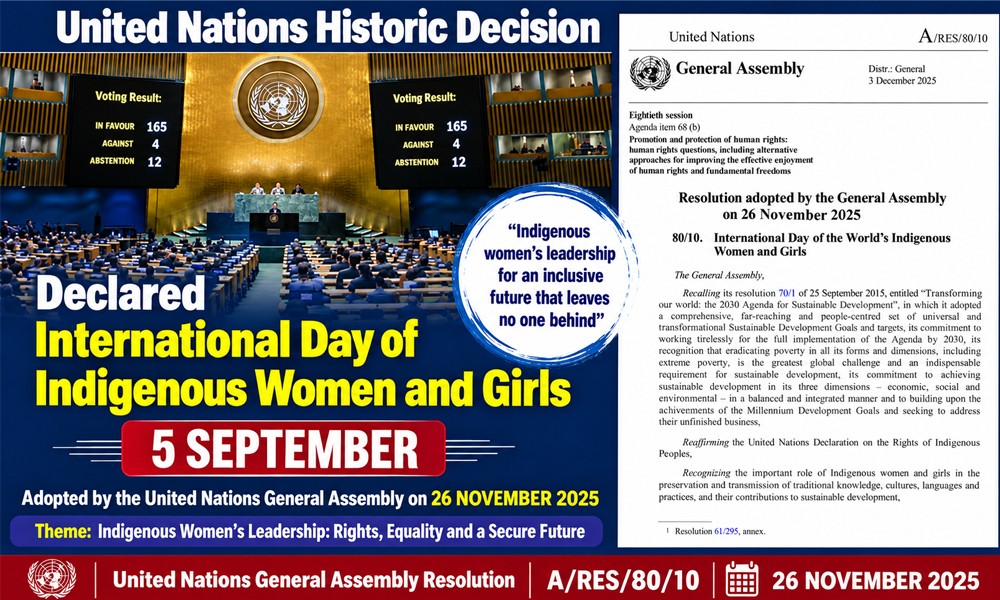
The United Nations General Assembly’s decision to designate September 5 as the International Day of Indigenous Women and Girls has brought renewed global attention to the leadership, contributions, knowledge, rights and continuing struggles of Indigenous women and girls around the world.
The observance follows the adoption of UN General Assembly Resolution A/RES/80/10 on November 26, 2025, which formally declared September 5 as the international day. The declaration is being viewed as an important opportunity to recognise Indigenous women and girls as leaders, knowledge holders and rights-bearers while drawing attention to the structural inequalities they continue to face.
Certain dates in history carry meanings far beyond their place on the calendar. They preserve memories of resistance, sacrifice and unfinished struggles for justice. September 5 has become one such date, closely tied to the life and sacrifice of Bartolina Sisa, an Aymara Indigenous woman who became a powerful symbol of resistance to Spanish colonial rule in 18th-century Bolivia.
Bartolina Sisa and the Legacy of Resistance
Bartolina Sisa was a prominent leader of the Aymara Indigenous community and played a pivotal role in the Indigenous uprising against Spanish colonial rule in the La Paz region. Alongside Túpac Katari, she helped organise and lead resistance against colonial exploitation, oppression and the subjugation of Indigenous communities.
Although Sisa was Túpac Katari’s wife, defining her historical importance solely through that relationship fails to recognise her independent role as an organiser and resistance leader. She emerged as a political figure in her own right and actively challenged the colonial system that oppressed Indigenous peoples.
Spanish colonial authorities eventually captured her. On September 5, 1782, Bartolina Sisa was executed by the colonial regime. Her execution was intended to suppress the resistance she represented, but history produced the opposite result. Although her life was taken, the memory of her struggle continued and gradually became a lasting symbol of courage, leadership and resistance among Indigenous women.
The United Nations’ designation of September 5 as an official international observance therefore carries significance beyond commemorating Bartolina Sisa alone. It also represents international recognition of demands that Indigenous women around the world have raised across generations.
September 5 subsequently became closely associated in Bolivia with the remembrance of Sisa’s sacrifice and the struggles of Indigenous women. Over time, that historical memory expanded beyond Bolivia and became connected to wider international movements demanding recognition and justice for Indigenous women.
The United Nations’ designation of September 5 as an official international observance therefore carries significance beyond commemorating Bartolina Sisa alone. It also represents international recognition of demands that Indigenous women around the world have raised across generations.
Rights, Knowledge and Self-Determination
The International Day of Indigenous Women and Girls places particular emphasis on Indigenous women’s rights to land and territory, participation in decisions concerning natural resources, protection of languages and cultures, justice in cases of displacement, and access to services for those experiencing violence, poverty and discrimination.
The observance also highlights the importance of ensuring that Indigenous women are directly involved in decisions affecting their lives, communities and futures. Their right to self-determination remains central to discussions about development, governance, land, resources and political participation.
The United Nations increasingly recognizes Indigenous women and girls not simply as people affected by discrimination and inequality, but as rights-holders, custodians of knowledge, and agents of change.
Indigenous women play an essential role in preserving and transmitting languages, traditional knowledge, cultural practices, governance systems and biodiversity from one generation to another. At the same time, they continue to face multiple and overlapping forms of inequality, including limited access to land and natural resources, poverty, unequal access to healthcare, barriers to justice, gender-based violence, and inadequate representation in decision-making processes.
The explicit inclusion of the word “Girls” in the International Day of Indigenous Women and Girls also reflects the understanding that Indigenous Peoples’ rights cannot be limited to the present generation. The protection of Indigenous girls is directly connected to the survival and future of Indigenous communities.
Indigenous girls' ability to learn their mother tongues, take pride in their cultural identity, receive quality education and healthcare, access technology and employment, and participate meaningfully in future decision-making will determine the strength of Indigenous societies in the generations ahead.
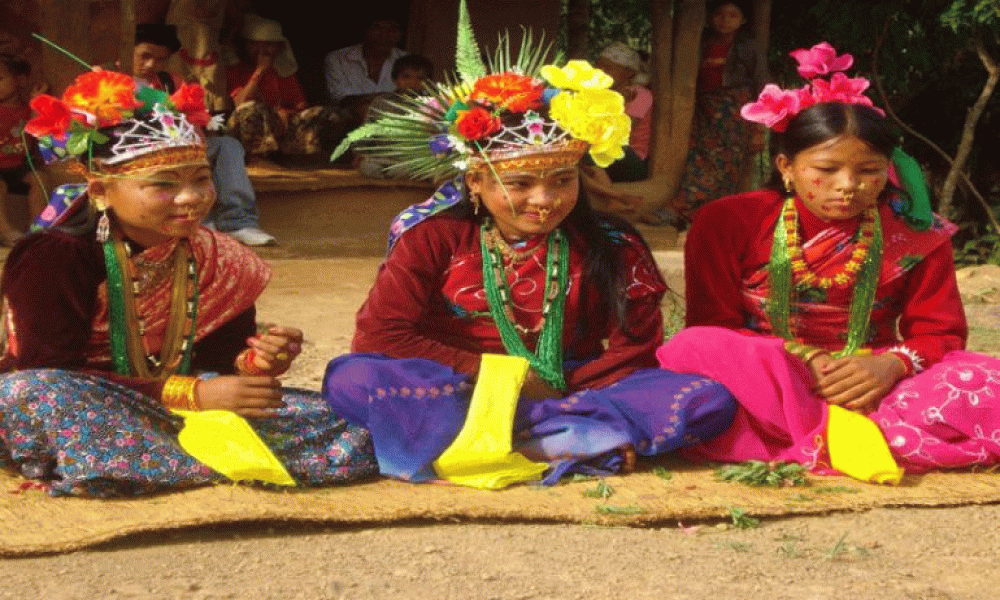
Language preservation remains particularly important. The disappearance of a language represents more than the loss of words. It can mean the disappearance of an entire worldview, identity, and system of knowledge. Similarly, losing traditional knowledge means losing generations of accumulated community memory and experience.
Protecting the rights of Indigenous girls is therefore inseparable from protecting the future of Indigenous peoples.
Nepali Context
Although Bartolina Sisa’s story emerged from Bolivia, the wider issues represented by her struggle also resonate strongly in Nepal.
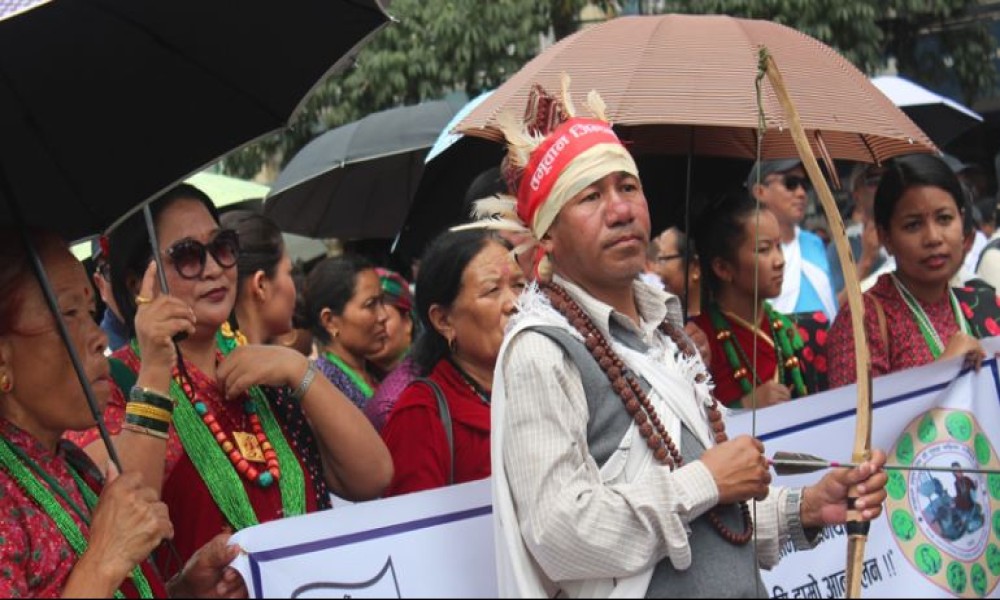
Throughout Nepal’s history, women have raised their voices against social injustice, oppressive systems, and authoritarian rule. Indigenous women from different communities have challenged social malpractices, injustice, gender discrimination, and political oppression during different historical periods.
Much of their contribution, however, has remained outside mainstream written history. In many Indigenous communities, people transmitted historical experiences primarily through oral traditions, so important stories of women’s resistance and leadership have survived largely through collective and community memory.
Indigenous women’s rights in Nepal cannot be viewed solely within the framework of gender equality. They are also deeply connected to land rights, cultural rights, linguistic rights, access to natural resources, environmental justice, and political participation.
The experiences of Nepali Indigenous women and Bartolina Sisa do not need to be placed within identical historical circumstances. Their societies, periods, and forms of struggle were different. Nevertheless, the stories share important themes of resistance, dignity, rights, identity, and Indigenous peoples' ability to determine their own futures.
Indigenous women in Nepal possess their own histories of struggle and resilience. Their daily lives remain closely linked with land, forests, rivers, agriculture, livestock, language, culture, and community relationships.
As a result, Indigenous women’s rights in Nepal cannot be viewed solely within the framework of gender equality. They are also deeply connected to land rights, cultural rights, linguistic rights, access to natural resources, environmental justice, and political participation.
Development Projects and Their Impact on Indigenous Women
Indigenous communities across Nepal continue to experience the consequences of development projects, protected areas, forest management initiatives, resource extraction, hydropower projects, and other forms of infrastructure development.
Women often experience these impacts differently because they carry much of the responsibility for maintaining households, securing food and water, managing agricultural activities, and sustaining everyday community life.
Disruption to forests, water sources, farmland, food systems and traditional livelihoods can therefore have a particularly direct impact on Indigenous women.
Development-related displacement also creates concerns over the extent to which Indigenous women are consulted and whether their rights and priorities are incorporated into decision-making processes.
These concerns reinforce the need for development policies to recognise Indigenous women not simply as people affected by projects but as participants whose knowledge, consent, and leadership must be taken seriously.
Climate Change Creates Additional Vulnerabilities
Climate change has created further challenges for Indigenous women and girls, particularly in Himalayan and rural communities where livelihoods depend heavily on natural resources.
Changes in water availability, agriculture, forests, and other resource-dependent livelihoods can increase women’s workloads and create additional risks related to health, education, food security, and personal safety.
Development-related displacement also creates concerns over the extent to which Indigenous women are consulted and whether their rights and priorities are incorporated into decision-making processes.
Girls may also be affected when increased household responsibilities interfere with education and other opportunities.
The lived experience and traditional knowledge of Indigenous women therefore play an important role in shaping climate change and environmental policies.
September 5 in Nepal consequently carries significance beyond the ceremonial marking of another international observance. It creates an opportunity to examine the participation of Indigenous women in decisions involving land and natural resources, protections available to communities displaced by development, recognition of women’s roles in safeguarding mother tongues and traditional knowledge, inclusion of Indigenous women’s knowledge in climate policy, and their representation within political and administrative decision-making structures.
Meaningful Participation at UN
Recent United Nations documents concerning women and Indigenous peoples have emphasised equal and meaningful participation by Indigenous women and girls in areas including land, natural resources, education, healthcare, technology, employment, and governance.
The September 5 declaration alone, however, cannot automatically guarantee those rights.
The United Nations has indicated that the new international observance is intended to move beyond symbolic commemoration. Its objectives include increasing global visibility of the leadership and contributions of Indigenous women and girls, raising public awareness of the challenges they face, strengthening advocacy, and encouraging sustained political attention and resource allocation.
September 5 therefore represents a beginning rather than an end. It carries historical memory, raises political and social concerns, and reflects a commitment to improving the future of Indigenous women and girls.
Bartolina Sisa challenged the injustices of her time. Indigenous women in Nepal have likewise confronted the injustices and inequalities of their own historical periods, and Nepali Indigenous women today continue to challenge conditions that affect their rights, identity, resources and participation.
The future of Indigenous girls will depend on whether their languages continue to survive, their lands and territories remain protected, their cultures are transmitted to future generations, their traditional knowledge is recognised, their voices are included in development processes, and they can exercise meaningful authority over decisions that determine their futures.
More Than a Commemorative Day
The International Day of Indigenous Women and Girls is more than a commemorative date. It represents a long historical journey shaped by resistance, sacrifice, leadership and the continuing pursuit of rights.
Bartolina Sisa’s sacrifice remains one of the defining symbols of that journey, while the experiences of Indigenous women in different parts of the world demonstrate that many of the issues she represented continue in new forms.
For Nepal, September 5 provides an opportunity to reaffirm a commitment not only to hearing the voices of Indigenous women and girls but also to ensuring their meaningful participation at the center of decisions concerning their land, communities, culture, resources, and future.
Designating an international day creates recognition, but securing rights requires ongoing action. Bartolina Sisa’s story remains an important chapter in that continuing struggle. The next chapter will be shaped by the opportunities, rights, leadership, and self-determination secured by Indigenous women and girls in Nepal and around the world.