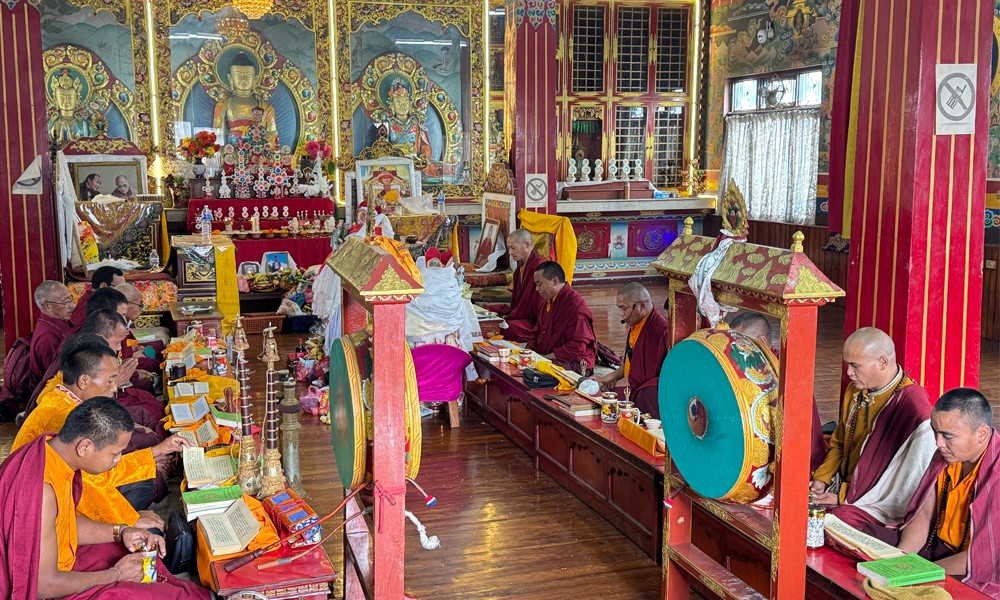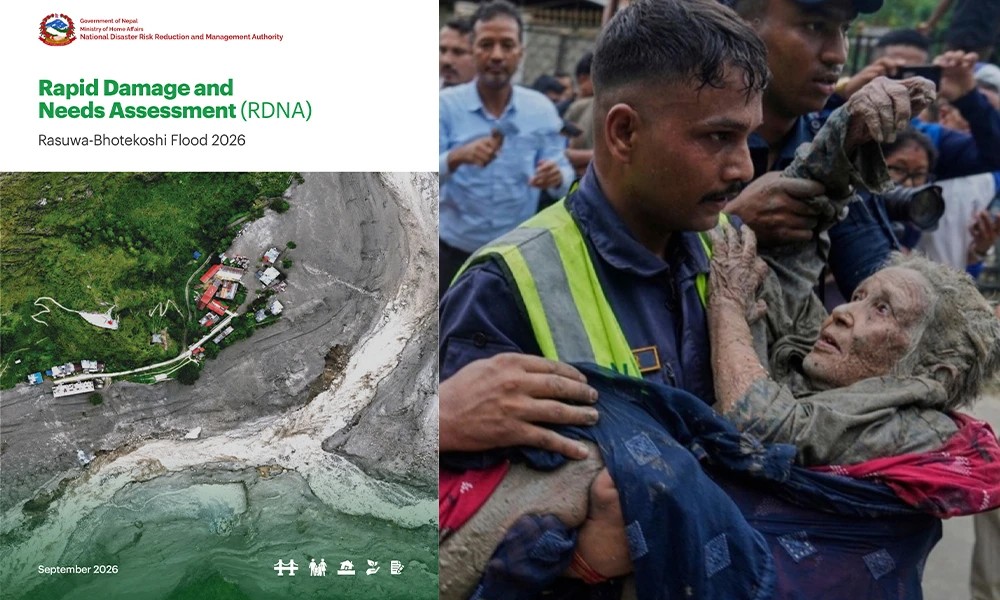

In the quiet halls of Gasok Monastery in Swayambhu, 547 displaced residents from Syaphrubesi, Rasuwa, find themselves living as disaster refugees. They are survivors of the devastating flash floods that recently tore through the Rasuwa–Bhote Koshi–Trishuli river corridor.
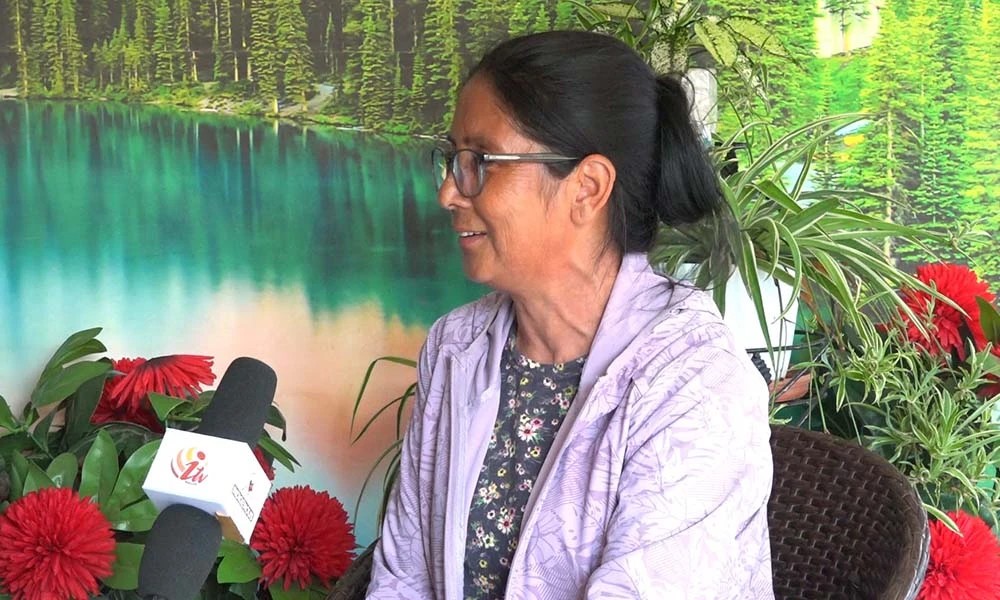
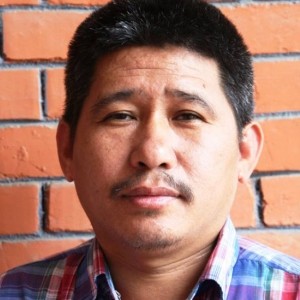
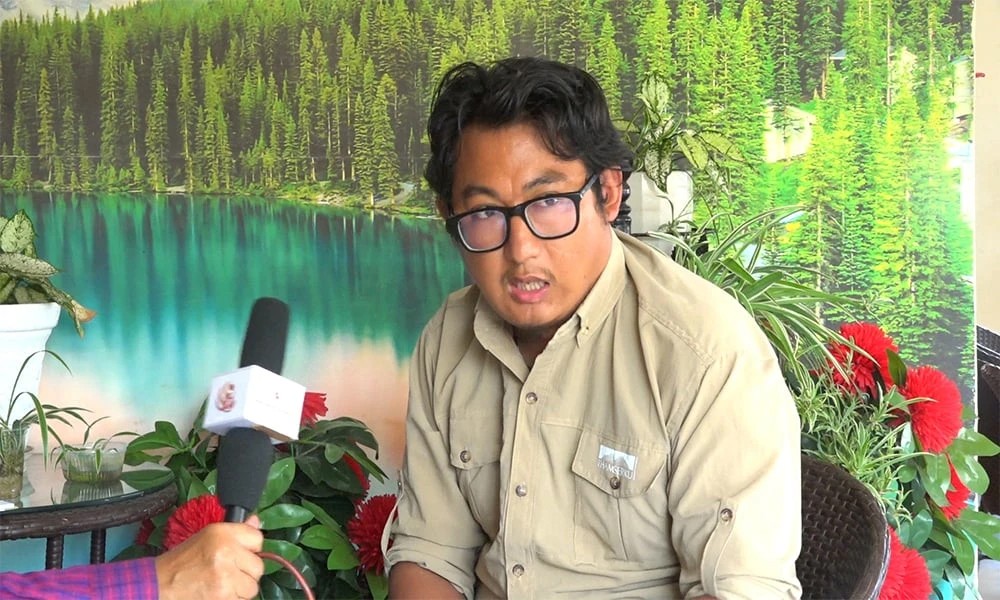
Among them is Chhiring Tenzing Lama, a man acutely aware of how close he came to death.
Lama was employed at the Upper Trishuli Hydropower Project. On August 26 (Bhadau 10)—the day the catastrophic flood struck—he happened to be away in Kathmandu on personal business. That twist of fate saved his life.
“Yes, I survived purely by luck,” Chhiring admits softly. “If I had been working at the hydropower site that day, today would have marked my 21st-day memorial service.”
His coworkers—including Nepali technicians and South Korean nationals—remain missing, buried or swept away by the raging waters.
Memories Submerged, Lineages Severed
While Chhiring survived, the deluge decimated nearly everything that anchored him to his ancestral home.
In Timure, one of the hardest-hit settlement hubs, stood his maternal uncle’s home. Today, it is an unrecognizable wasteland of debris and boulders. Twenty-five of his relatives—including his maternal uncle, aunt, and grandfather—are missing, presumed dead. Not a trace of them has been found.
“I survived purely by luck,” Chhiring admits softly. “If I had been working at the hydropower site that day, today would have marked my 21st-day memorial service.”
In Syaphrubesi, Chhiring’s ancestral home met a similar fate. The building had been run by his paternal aunt as a modest lodge and restaurant. Both his aunt and the building vanished into the swollen river.
“More than the grief itself, it is the sheer dread of that day that still haunts me,” he says.
From Yak Pastures to a Vanished Frontier Town
Chhiring’s family history reflects the modern transition of Rasuwa’s indigenous communities.
Two generations ago, his grandfather herded yaks in the alpine meadows of Nagi, producing clarified butter (ghee) and buttermilk. His father carried on the pastoral tradition for a time, but being illiterate, he made a determined bet on his children’s future. He sold off the yak sheds, moved down to the emerging roadside settlement of Syaphrubesi, built a house, and sent his children to school.
As road connectivity expanded toward the northern border crossing of Kerung, Syaphrubesi transformed into a bustling hub for the Langtang trekking circuit, the Tamang Heritage Trail, and mega-hydropower projects.
“We followed the arrival of modern infrastructure down to Syaphrubesi,” Chhiring recalls. “First, our ancestral yak sheds were gone. And now, the house we built with those proceeds has been wiped off the map too.”
Erasing an Ancient Heritage
Beyond the catastrophic toll on human lives, Chhiring laments a silent, irreparable loss: the destruction of ancient Tamang civilization along the borderlands.
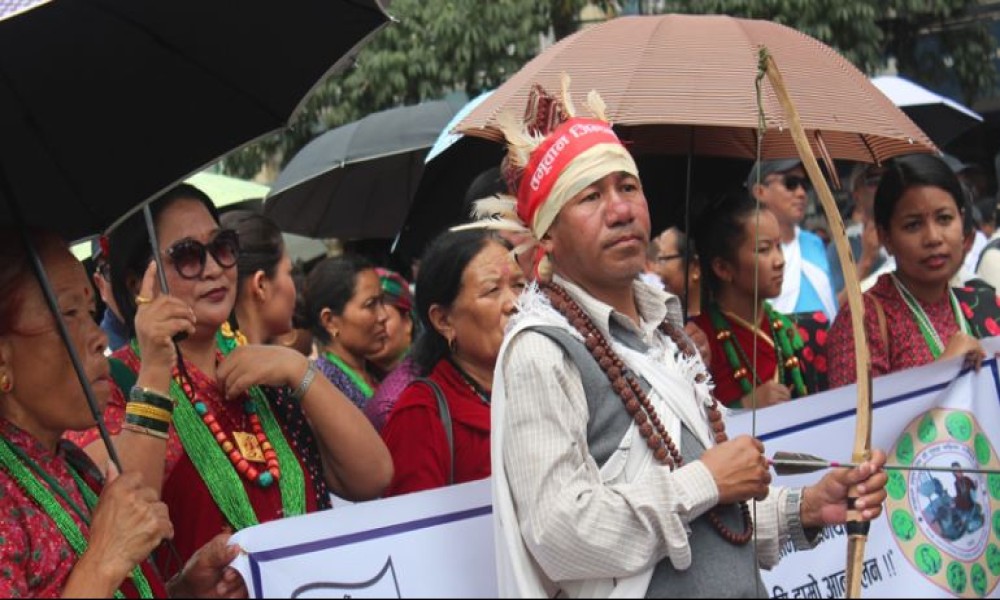
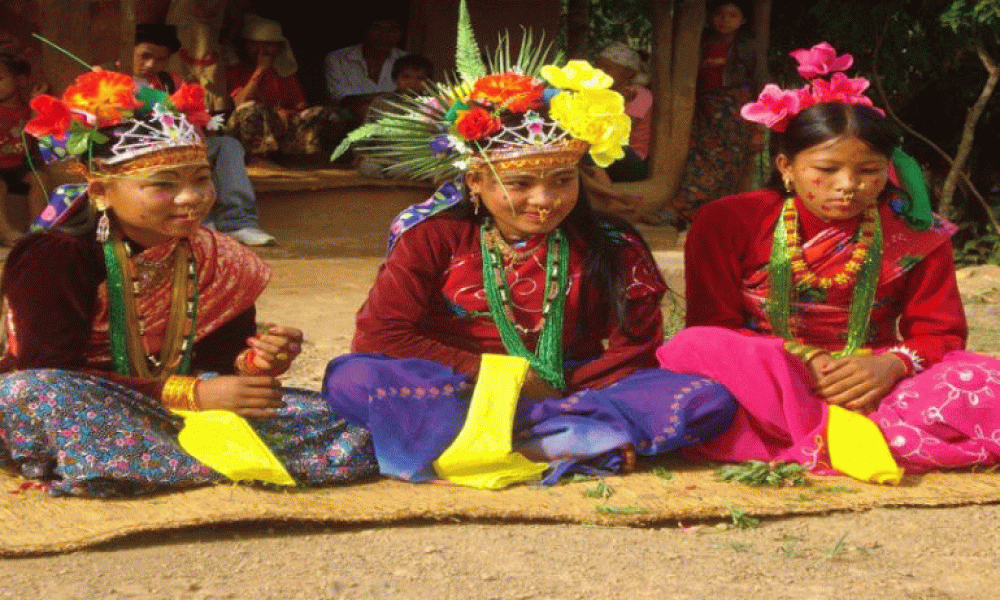
Rasuwa, where over 85 percent of the population belongs to the Tamang indigenous community, is culturally steeped in centuries of cross-border trade and spiritual exchange with Tibet. The valleys were once dotted with historic chortens, roadside mani walls, prayer wheels, and ancient shrines.
Among the greatest casualties was the historic Chholing Monastery in Syaphrubesi—widely regarded as the oldest Buddhist monastery in Rasuwa. The flood leveled the complex entirely.
“The flood didn't even leave behind the ruins,” Chhiring says. “It housed priceless archaeological artifacts, centuries-old idols, and sacred pillars that connected us directly to our ancestors. Stone inscriptions scattered across our village have vanished without a trace. The flood swept away our sacred stones, our stupas, and the very footprints of Tamang identity.”
“The flood didn't even leave behind the ruins,” Chhiring says. “It housed priceless archaeological artifacts, centuries-old idols, and sacred pillars that connected us directly to our ancestors. Stone inscriptions scattered across our village have vanished without a trace. The flood swept away our sacred stones, our stupas, and the very footprints of Tamang identity.”
He expresses deep frustration with the official response: “I hear the government has conducted damage assessments and produced reports, but there is not a single word about this cultural erasure. Loss of life must be accounted for, but cultural preservation must be treated as an integral part of disaster recovery.”
For survivors, he notes, their heritage is an essential anchor for recovery: “Those who died are gone. For the living, heritage is what gives us the psychological resilience to survive. Rebuilding that sacred culture could take generations.”
‘Send Us Home, Not Away’
Despite the trauma, Chhiring and his fellow displaced villagers firmly reject the prospect of permanent relocation outside their native territory.
“We want to be rehabilitated as quickly as possible, but on our own ancestral land,” he insists. “Relocating us outside our homeland is entirely unacceptable.”
He points out that Rasuwa still has secure, high-ground locations away from flood-prone riverbanks where communities can be safely resettled.
“All we ask is that the government swiftly restore basic infrastructure—roads, power, and telecommunications,” Chhiring says. “We know our forests, we know the spirits of our hills and mountain passes. We know how to carve out a living with our own hands. But to rebuild our lives, we need the state to secure our basic foundation first.”