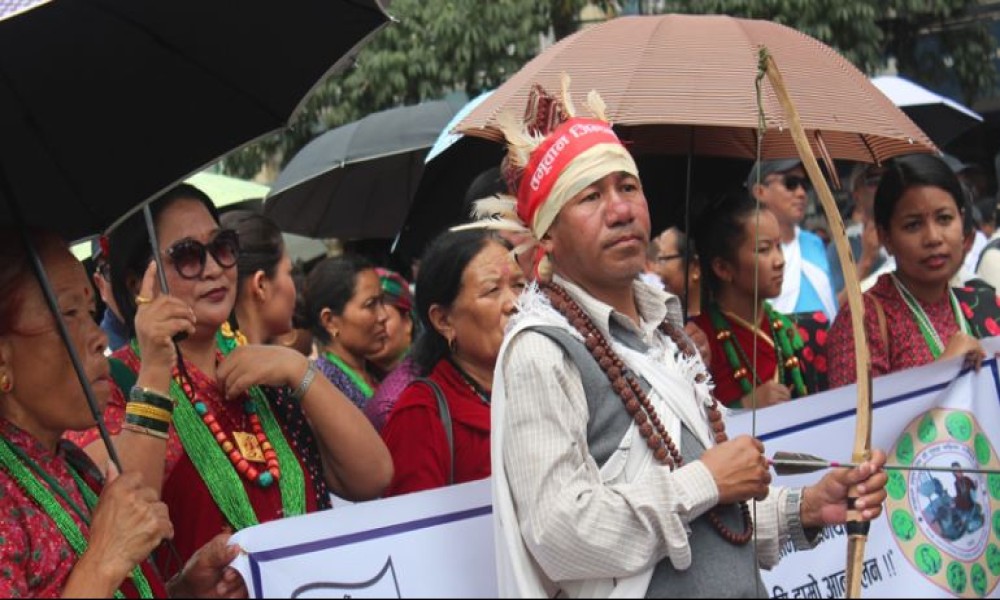

Hydropower projects operating and under construction in Nepal have been accused of encroaching on the customary lands of Indigenous Peoples, displacing livelihoods, destroying natural resources, and violating human rights.
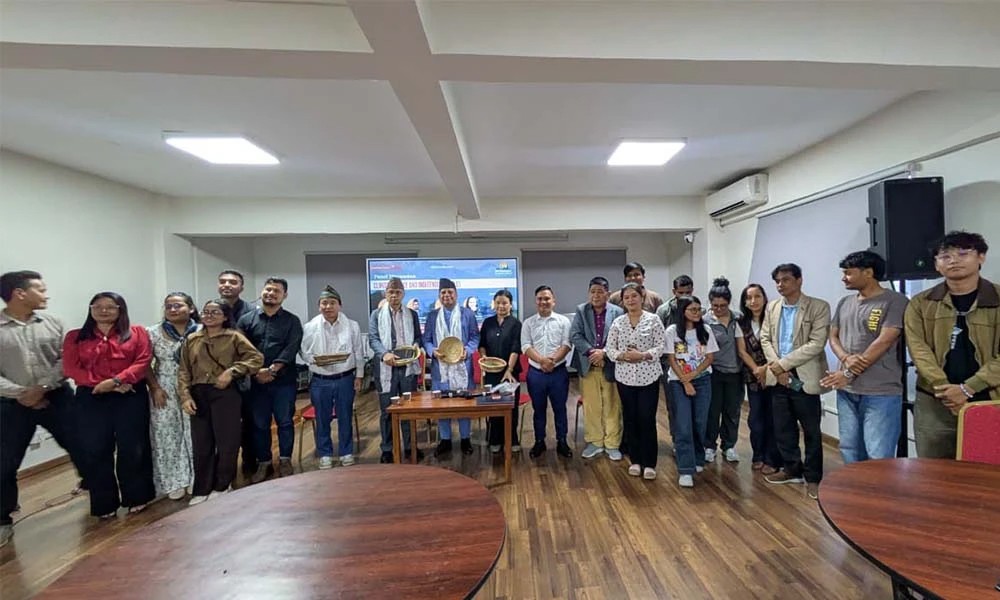
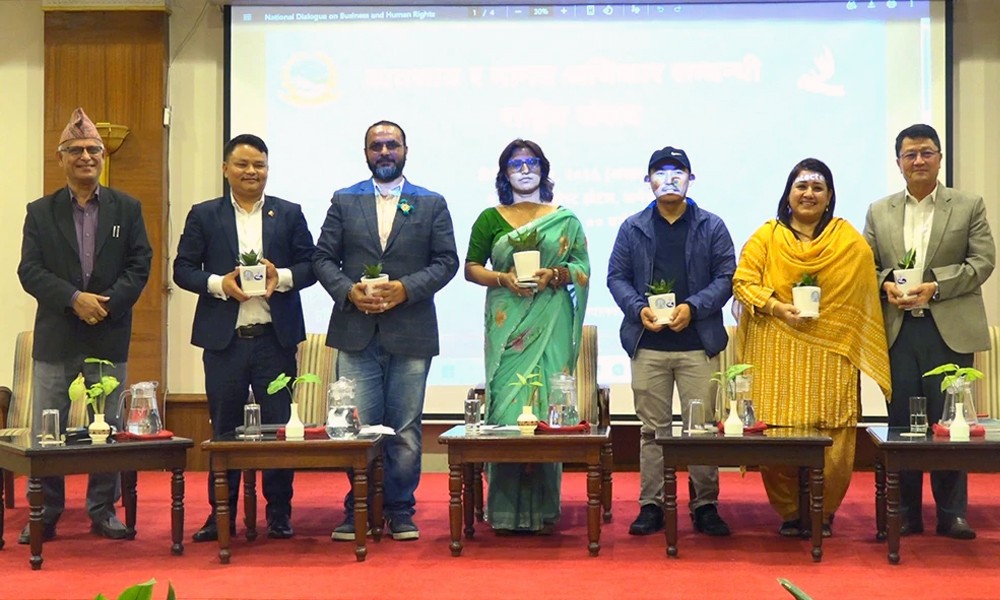
The allegations were raised by people affected by hydropower projects during a national dialogue on “Business and Human Rights,” jointly organized by the National Human Rights Commission (NHRC) and the Lawyers’ Association for Human Rights of Nepalese Indigenous Peoples (LAHURNIP).
During panel discussions on “Indigenous Peoples’ Rights and Hydropower Projects” and “Business and Human Rights in Environmental Protection,” participants said current and completed hydropower projects had violated their human rights by failing to comply with the Constitution of Nepal, domestic laws, and international treaties.
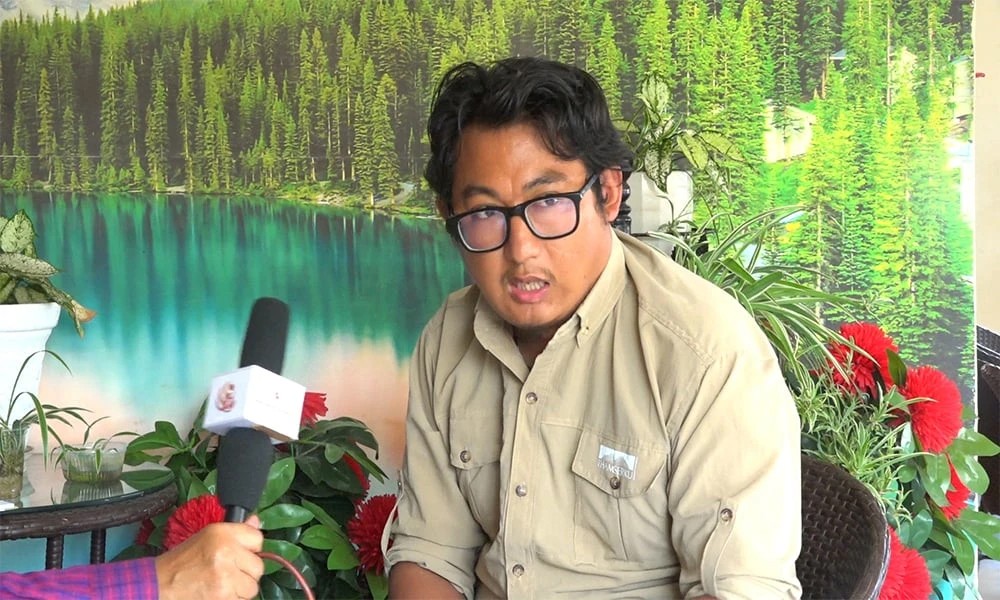
Speaking on behalf of affected residents, Shri Prasad Limbu accused hydropower projects of destroying the customary Mundhum cultural and religious sites of Indigenous Peoples. He said that 13 hydropower projects under construction, including the Upper Tamor Hydropower Project, are operating in Phaktanglung Rural Municipality of Taplejung district.
Limbu said the projects on the Tamor River, known as Imbiri by the Yakthung (Limbu) community, failed to obtain Free, Prior, and Informed Consent (FPIC). He also alleged that when locals protested for meaningful participation, they were harassed through legal action. According to Limbu, cases remain active against 23 individuals, arrest warrants have been issued for 10 others, and affected locals have been falsely portrayed as anti-development and communal. He added that the projects destroyed cardamom fields and displaced dozens of families, leaving them unable to remain in the area because of flooding during the rainy season and smoke and dust pollution in the winter.
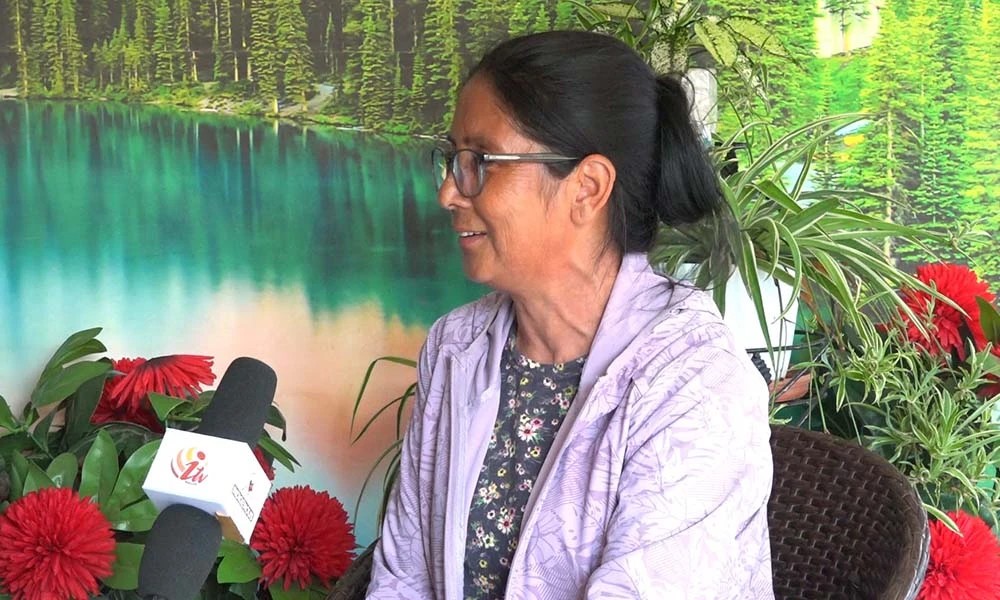
Another affected resident, Uttam Sunuwar, General Secretary of the Sunuwar Sewa Samaj, accused hydropower projects of displacing Indigenous Peoples and violating the law by failing to release the mandatory 10 percent water flow. He described the situation as open robbery by hydropower developers and said thousands of Local and Indigenous People have been displaced along the Likhu River, which flows between Ramechhap and Okhaldhunga districts. He noted that people have also been affected by the construction of access roads and that no effective mechanism exists to address their grievances.
Hydropower projects operating and under construction in Nepal have been accused of encroaching on the customary lands of Indigenous Peoples, displacing livelihoods, destroying natural resources, and violating human rights.
During the program, Advocate Bhim Rai, Secretary of LAHURNIP, said hydropower projects are displacing Indigenous Peoples from their traditional lands in the name of development, cutting them off from natural resources, forests, streams, and rivers that are closely tied to their livelihoods, rituals, and culture.
Rai said that since the Supreme Court has issued directive orders to implement the United Nations Declaration on the Rights of Indigenous Peoples (UNDRIP) and ILO Convention No. 169, both the private sector and the government are legally bound to respect Free, Prior, and Informed Consent. He added that failure to follow FPIC violates indigenous peoples’ cultural rights, their right to a clean environment, and their right to preserve their traditions.
Compliance with FPIC and Public Hearings
Participants in the national dialogue stressed that FPIC must be implemented from the hydropower project survey stage. They said that although the requirement to conduct FPIC during the Environmental Impact Assessment (EIA) process and to include customary institutions in public hearings is clearly stated in Nepal’s National Action Plan on Business and Human Rights, it has not been effectively implemented.
During the panel discussion, Suman Joshi, an executive member of the Independent Power Producers’ Association, Nepal (IPPAN), said that hydropower projects have been implementing Corporate Social Responsibility (CSR) and Community Support Programs (CSP) as required by Nepali law. Through these programs, she said, projects have built school buildings, conducted health camps, implemented drinking water schemes, constructed roads, carried out tree plantation drives, and provided skills-based training.
Shaligram Bhandari, senior divisional engineer at the Ministry of Energy, Water Resources, and Irrigation, said the government is facilitating and regulating hydropower projects in accordance with the law. He explained that the implementation of FPIC has stalled because it is not explicitly defined in any domestic law. However, he said the ministry actively monitors and regulates projects where social, cultural, and indigenous issues are clearly outlined in approved EIA reports.
In response, other participants said that because Nepal has ratified ILO Convention No. 169, it has the same force as domestic law, and there should be no legal obstacle to implementing FPIC. They argued that constitutional provisions, domestic laws, international treaties, and Supreme Court directives requiring implementation of UNDRIP and ILO Convention No. 169 require both private and government actors to comply with FPIC.
Judicial and Institutional Accountability
The program was chaired by NHRC Chairperson Tap Bahadur Magar, and Supreme Court Justice Hari Prasad Phuyal delivered a special address. Justice Phuyal said that, like the state, the private sector must also be accountable for human rights and operate in a human-rights-friendly manner. He emphasized the need to implement existing constitutional provisions, ratified international conventions and treaties, and the Government of Nepal’s action plan in line with the UN Guiding Principles on Business and Human Rights.
Nepal has ratified ILO Convention No. 169, it has the same force as domestic law, and there should be no legal obstacle to implementing FPIC. They argued that constitutional provisions, domestic laws, international treaties, and Supreme Court directives requiring implementation of UNDRIP and ILO Convention No. 169 require both private and government actors to comply with FPIC.
NHRC Chairperson Tap Bahadur Magar said the commission frequently receives complaints about violations of Indigenous Peoples’ rights during business operations. He said protecting citizens’ rights is the core objective of the UN Guiding Principles on Business and Human Rights. Acknowledging concerns that many indigenous peoples lack formal land ownership documents for ancestral lands and that their rituals and culture are being affected, Magar said there is an urgent need for an environment in which businesses can operate without violating human rights.
Closing the session, NHRC Secretary Murari Prasad Kharel said the commission is actively monitoring the implementation of the Action Plan on Business and Human Rights across the federal, provincial, and all 753 local levels to compile a report and will continue discussions with relevant stakeholders.
Dinesh Ghale, Chairperson of LAHURNIP, said that while the Action Plan on Business and Human Rights technically addresses protection against the exploitation of Indigenous Peoples’ lands and natural resources, enforcement remains highly ineffective.
Shova Sunuwar, President of the National Indigenous Women’s Federation (NIWF), said that “National Pride Projects” have encroached on Indigenous Peoples’ lands, territories, and resources. She stressed that the right to self-determination of Indigenous Peoples must be fully respected in business operations.